


Everyday Examples of Integers in Action
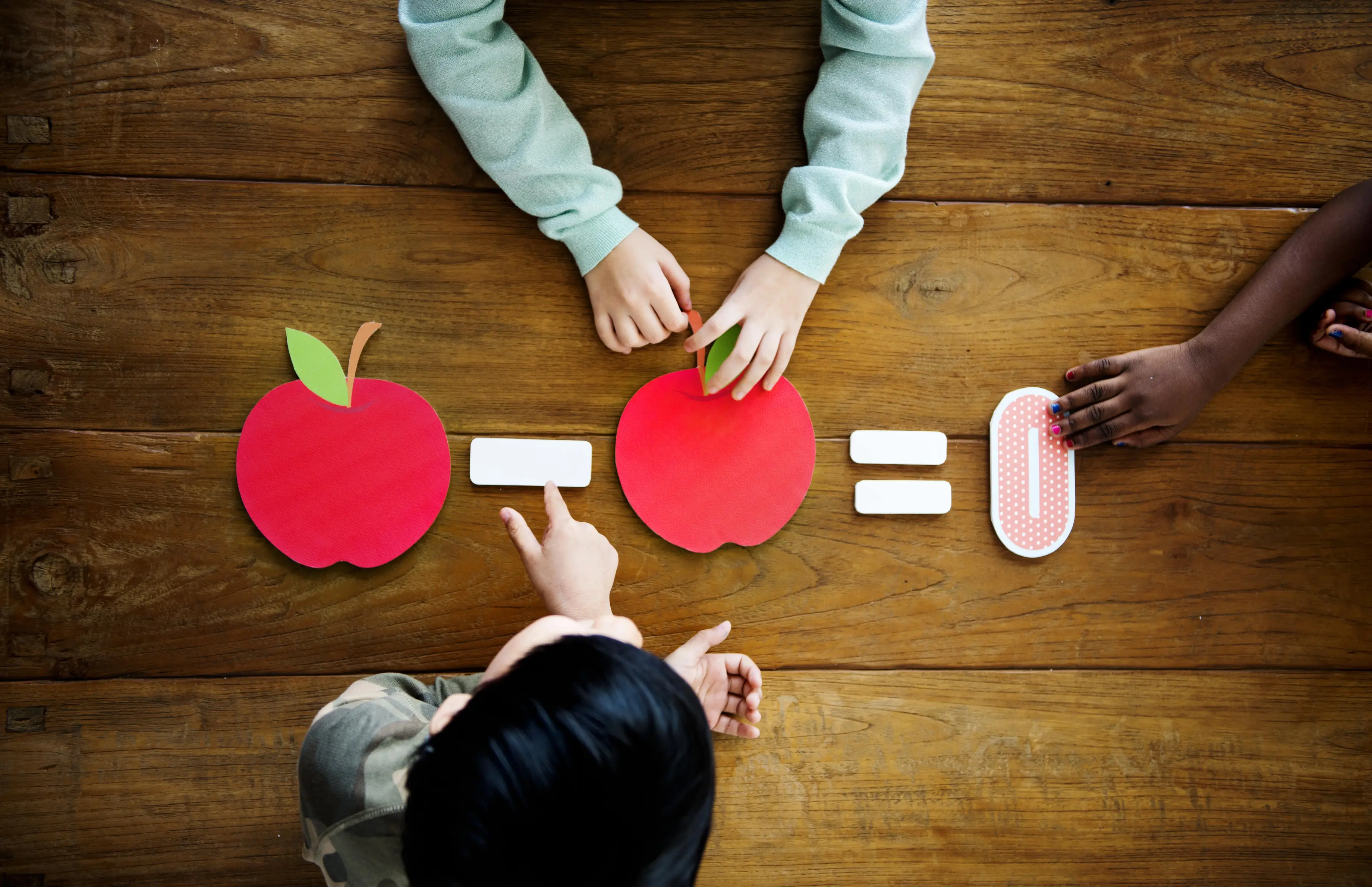
Integers may sound like a big math word, especially to young learners encountering them for the first time. But they are really just whole numbers: positive, negative, and zero.
Learning about integers is essential because they are part of our daily lives. We use them even without realizing it.
Integers help us describe things with opposites, like gains and losses or temperatures rising and falling. Think about the temperature dropping below zero, the score changing in a video game, or points going up in a basketball game. All of these are examples of integers in action.
When kids see integers in the world around them, they understand that math isn’t limited to the classroom. It’s a tool they’ll use every day.
What Are Integers?
Integers are whole numbers. They can be positive (1, 2, 3 …), negative (-1, -2, -3 …), or zero.
Integers are limited to whole numbers, while fractions and decimals represent values in between. So while 1 is an integer, 1.5 is not, and neither is ½.
A number line is a helpful way to picture integers. Imagine it stretching forever in both directions, with positives to the right, negatives to the left, and zero in the center. This visual gives kids an easy way to imagine how integers move forward and backward. If your child is also working on prime numbers, that guide covers the definition and a full list to 100.
Everyday Examples of Integers
Integers are everywhere. They show up in our routines, hobbies, and even daily conversations children have.
Here are some examples of integers in everyday life that show how often we use them:
- Temperature: Above zero means positive, while below zero means negative.
- Money: A balance can be positive when you save or negative when you owe.
- Sports Scores: Teams gain points when they score and, in some sports, lose points through penalties.
- Video Games: Scores, lives, or levels often use integers to show progress.
Parents can use these real-world examples as teachable moments to reinforce math skills without making it feel like a lesson.
Integers in 7th Grade Math
By middle school, students work with integers in more advanced ways. Teachers introduce problems that combine positives and negatives to encourage students to think about both direction and value. They also learn rules that explain why multiplying a positive and a negative results in a negative answer.
Working with integers in 7th grade usually involves:
- Adding and Subtracting Integers: Combining positive and negative numbers
- Multiplying and Dividing Integers: Learning the rules for when answers are positive or negative
- Using Integers in Word Problems: Applying integers to real-world situations, like temperatures, distances, and finances
Here’s an example of a problem that uses integers:
If it’s -3°F in the morning and the temperature rises by 7°F, what’s the new temperature?
The answer is 4°F.
Having a solid foundation in integers by 7th grade helps prepare students for algebra and higher-level math.
Why Integers Are Useful in Real Life
Integers may be introduced in the classroom, but their usefulness extends beyond it. Without them, it would be difficult to talk about money in a savings account, a team’s progress, or the rise and fall of temperatures.
Integers are useful because they:
- Help Us Measure: We use integers to track and compare temperatures, financial balances, scores, and more.
- Support Problem-Solving: Students learn to think systematically by working with positive and negative numbers.
- Apply to Future Learning: Mastering integers prepares students for algebra, graphing, data analysis, and other challenging math concepts.
- Connect to Careers: Professionals in various fields, such as engineeingr and science, use integers to model and measure.
- Guide Everyday Decisions: Understanding integers is a practical skill that students can use immediately in their daily lives, such as budgeting their allowance.
Making Integers Fun: Engaging Ways To Learn
Learning integers doesn’t have to feel like a chore. Students stay more motivated when math is taught through activities they enjoy. Parents can make lessons stick by incorporating games and challenges into their child’s study sessions.
Here are some simple ways to make integers fun:
- Play Math Games: Online platforms like Prodigy Math let kids solve integer problems while exploring a virtual world. Because math is part of the game, practice feels like play instead of homework.
- Track the Weather: This is a simple activity parents can use to connect integers with real-life applications. Record daily temperatures with your child and talk about how they rise and fall.
- Scavenger Hunt: Let your children look for examples of positive and negative integers, like money in a wallet vs. money owed or floors above ground vs. below. Framing the lesson as a scavenger hunt makes practice both engaging and active.
- Sports or Fitness Challenge: Show gains and losses using points or steps in kids’ favorite sports or exercises. Kids will learn to link integers to activities they already enjoy.
- Create a Number Line Walk: Mark out a number line with tape and let kids walk forward for positives and backward for negatives. Movement reinforces learning for kids who learn best physically.
These activities keep practice light and fun while reinforcing integers as an important and natural part of daily life.

Learn About Integer Numbers Through Play
Learning math concepts like integers can sometimes feel intimidating to kids. Parents and teachers can help reframe these concepts as fun and useful through games and activities that require movement, observation, and imagination.
Help your child or students see how fun math can be! With Prodigy Math, kids can practice integer skills l through exciting challenges in a game they’ll love.


