Math Games: A Teacher and Parent Guide to Practice That Feels Like Play
What Makes a Good Math Game
An educational math game is one where a child does real numeracy thinking to play: counting spaces, comparing quantities, matching and sorting, spotting a pattern, sequencing, judging what is likely, or thinking a move ahead. If a game does not ask for any of that, it is not really a math game, no matter how many numbers appear on screen.
Prodigy has been shown to help students build stronger math skills.*
"Prodigy Math Game is a game-changer in math! Kids remain engaged and want to play more. Many of them will play at home after school."
Daniela Sutton, Teacher
Why This Is a Good Moment for Math Games
Kids are already playing games. In four years, gaming time among US children age 8 and under rose 65 percent, to an average of 38 minutes a day, and 5 to 8 year olds specifically went from 40 to 64 minutes a day. The question is not whether kids play games. It is what they are practicing while they do it.
There is also real momentum to build on. Nine-year-olds gained 4 points in math between 2022 and 2025, the first measurable recovery since the pandemic, and the students at the 10th percentile gained 9 points, more than twice the average gain. As the acting Commissioner of the National Center for Education Statistics put it about these results, he called it an optimistic release. The goal now is to build on that momentum, not to treat any one child as behind.
Math Games by Grade Band
Not every game fits every age. Here is a rough guide, with a deeper page for each grade linked below.
| Band | What's happening at this stage |
|---|---|
| K to 2 | Addition and subtraction facts, place value, and the basics of shape and measurement. See math games for 1st grade and math games for 2nd grade. Heading into back-to-school season? See fun math games to get kids excited for the new year. |
| 3 to 5 | Multiplication, division, and fractions all land around 3rd grade, then build through 5th. See math games for 3rd grade and multiplication and math facts games. |
| 6 to 8 | This is the band that needs the most support and has the least content written for it. 44 percent of educators say the majority of their middle school students face severe or very severe challenges reaching math proficiency, a higher share than at any other grade band. For quick, low-pressure practice at any of these ages, see quick and quiz-style math games. |
Online vs. Classroom vs. Printable Math Games
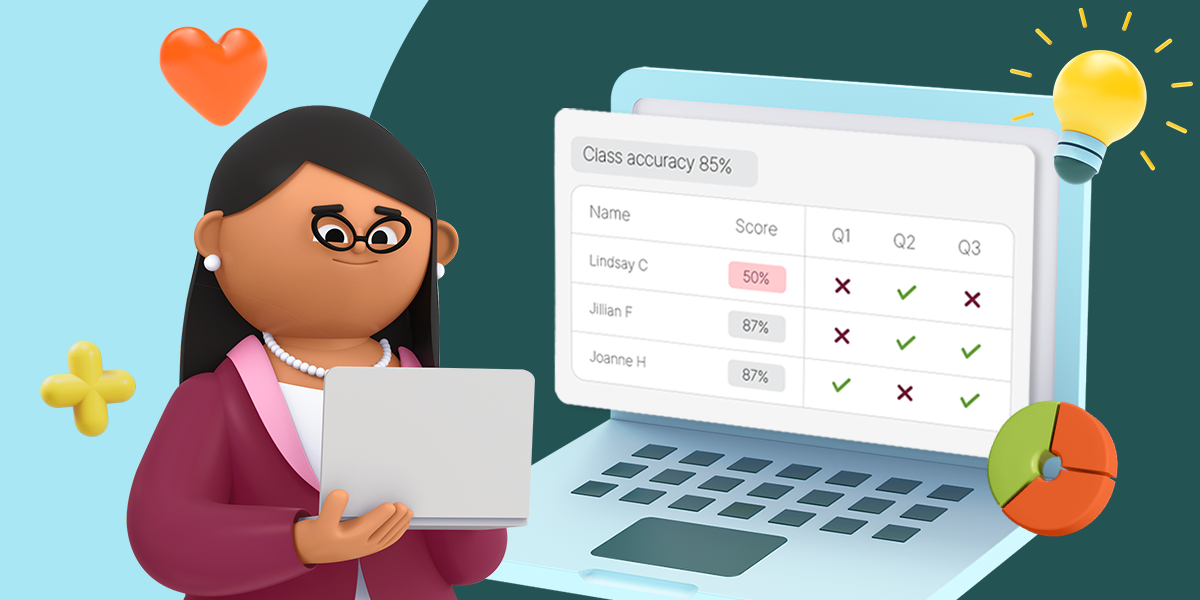
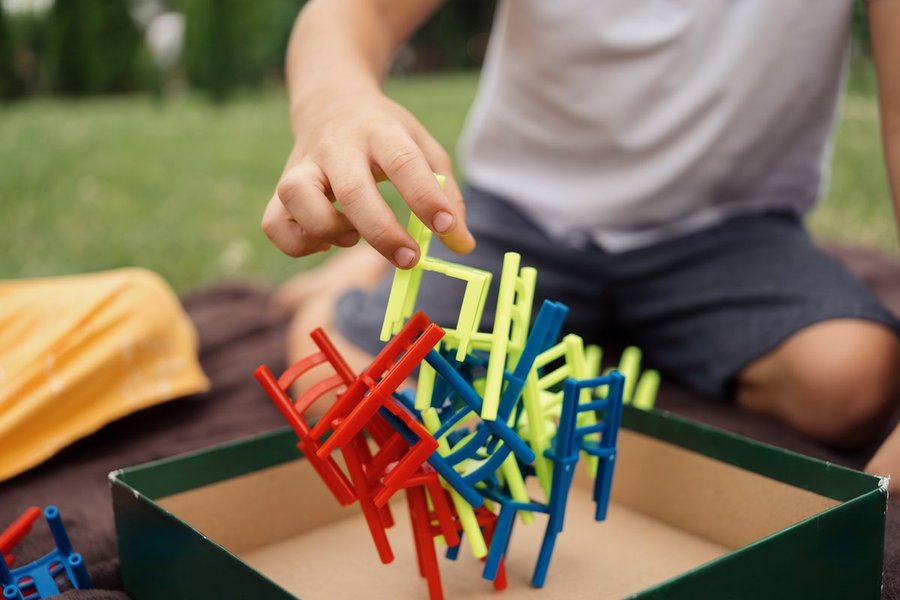
None of these formats is automatically better. Online games, like Prodigy, adapt to a student in real time and give teachers a report afterward. Classroom games, like a quick round of bingo or a beach-ball toss, build in movement and social play that a screen cannot. Printable games ask nothing of a device at all, which matters on days when one is not available.
Most classrooms and homes end up using a mix, matching the format to the moment: a printable worksheet-style game for a quiet solo minute, a classroom game for group energy, and an adaptive digital game for practice that needs to target a specific skill.
Curriculum Alignment: Why "Standards-Aligned" Matters
When teachers integrate Prodigy into classroom instruction, student performance improves across key math standards.*
"I use Prodigy Math Game as an individualized intervention for my students. I love that I can assign different topics to specific students."
Melissa Corney, Teacher
A math game that is not tied to what a class is actually learning is just a distraction with numbers in it. The strongest math games let a teacher set the specific skill a student needs, whether that is a state standard, a specific unit, or a skill flagged as a gap in a recent assignment, so the game reinforces the lesson instead of replacing it.
For Parents: Practice That Doesn't Feel Like Homework
Consistent Prodigy use throughout the school year has been proven to help students strengthen foundational math understanding and confidence.*
"I recommend Prodigy because it allows kids to play a game while learning, and that is the best way for them to learn."
Selina Laws, Parent
Ten focused minutes, a few times a week, is what the research actually asks for. A comprehensive review of arithmetic fluency research recommends 2 to 10 minutes of practice at a time, several times a week, introducing only 3 to 4 new facts until they are recalled automatically. That is a much lower bar than most parents assume, and it is exactly the kind of dosage a short math game can deliver without turning into a nightly fight.
A Note for Screen-Time-Cautious Parents
Most parents are not against educational technology in general. In a recent survey, 75 percent of parents said their school's use of computers and tablets is already about the right amount, and only 1 percent wanted their children to have no screen time in school at all. As the president of the National Parents Union put it, describing how parents actually think about this, she said the trouble comes when people conflate educational technology with social media.
Six governors have also asked the country's pediatricians for national guidance on what counts as healthy numeracy play. That petition does not endorse any specific app, Prodigy included, and it explicitly leaves the definition of what qualifies to the experts. What it does confirm is that the conversation has moved past whether play counts toward math practice, and toward figuring out which kinds of play count best.
Prodigy: A Free, Standards-Aligned Math Game
Prodigy Math is free for teachers and students, aligned to state standards for grades 1 to 8, and built as a role-playing game where students answer curriculum-based math questions to progress. It has been recognized with the Mom's Choice Award and named a winner in The EdTech Cool Tool Awards, part of the world's largest recognition program for education technology.
Common Questions About Math Games
Are math games actually effective, or just fun?
Research on digital game-based learning found it improves students' problem-solving ability, with the games-plus-teaching-strategy combination producing roughly three times the effect of a game used entirely on its own. In other words, the game alone gets you a little. The game plus a teacher assigning it to a real lesson gets you three times as much. Separately, students who regularly engaged with Prodigy achieved greater improvements on state math assessments than their peers statewide.*
"Struggling students love Prodigy. They think they're playing a game, but in reality, they are learning and practicing. Some of my heaviest users of Prodigy have become my best students. There is a positive correlation between Prodigy usage and student performance."
Jezer Urena, Teacher
What is the difference between a math game and math practice that counts?
A math game that counts is tied to a specific skill a student is actually working on, whether that is set by a teacher, a curriculum, or a parent following what is taught in class. A math game that does not count is just open-ended play with numbers attached. Both have a place, but only one replaces a worksheet.
How much math game time does a child actually need?
Research on arithmetic fluency points to roughly 2 to 10 minutes at a time, a few times a week. More than that is fine if a child is enjoying it, but it is not required to see the benefit.
*Among multiple studies commissioned by Prodigy Education. Individual results may vary, results are not guaranteed. Studies may be viewed here: https://www.prodigygame.com/main-en/research