The Best Summer Activities for Kids in 2026: On Screen, Off Screen, and Everything In Between
Part of the Summer Screen Time and Outdoor Play Guide.
Every June, the same conversation happens in houses across the country. School is out. The kids are home. And within about four hours of the first day of summer, someone is bored.
The instinct is to reach for a list. 100 summer activities, ranked and categorized, printed and laminated to the fridge. It's a reassuring thing to do. It almost never works. Kids don't follow lists. They follow what's interesting.
So instead of a list, this article gives you a framework: a way of thinking about your child's summer that makes the inevitable screen time feel intentional, makes the outdoor play actually happen, and takes some of the pressure off you to plan every hour for ten weeks.
The Myth of the Perfectly Balanced Summer
Here's the version of summer parents secretly feel they should be delivering: mornings at the splash pad, afternoons reading in the garden, evenings playing board games as a family. Minimal screens. Maximum memories.
Here's the version most parents actually live: a mix of outdoor moments, indoor standoffs about screen time, a few genuinely magic afternoons, and a lot of improvising. Screens happen. Arguments about screens happen. The occasional guilt spiral about screens happens. The goal of a good summer isn't to eliminate any of that. It's to make the parts that matter actually count, on screen and off.
What Outdoor Play Actually Needs to Work
Kids don't go outside because you tell them to. They go outside because there's something to do out there. The classic problem with 'just go play outside' is that it requires children to generate their own engagement from scratch, which they can, but increasingly only do after a period of boredom they're not always patient enough to push through.
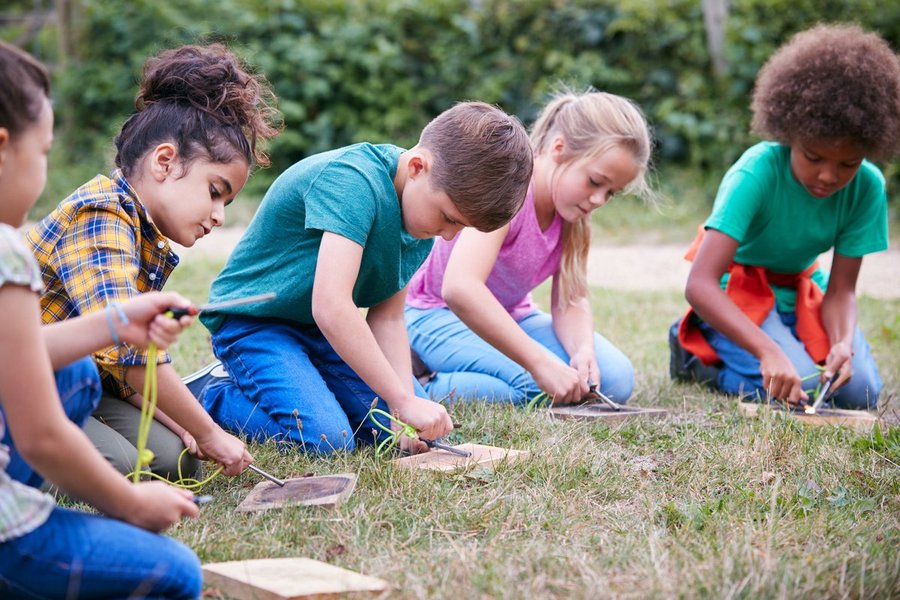
The children who spend the most time outdoors in summer tend to have some structure waiting for them. Not rigid scheduling, but a game to play, a challenge to find, a thing to look for. A math scavenger hunt that takes them around the garden. An activity sheet that sends them on a nature count. A challenge with a start and an end.
Prodigy's free Summer Activity Kit is built around exactly this insight. Running June 1 to August 31, with 92 activities across five individual grade-specific kits (grades 1 to 5), each curriculum-aligned and tied to math skills your child is building in-game. Parents who register a free Prodigy account get immediate access to their child's grade-specific kit at prodigygame.com/play-that-counts.
What Good Screen Time Looks Like Alongside Outdoor Play
The mistake most families make is treating screen time and outdoor play as opposites, as if every hour of screens displaces an hour outside, and vice versa. In practice, children move between modalities naturally when each one is satisfying enough.
A child who goes on a math scavenger hunt outside and then comes back inside to see their skills reflected in their Prodigy adventure is experiencing something different from a child who bounces between YouTube and the backyard with no connection between the two. That thread between the outdoor activity and the screen experience is what makes both feel like play rather than obligation.
The Activities That Actually Hold Attention
Research into what children actually choose to do voluntarily points to a consistent answer: children engage with things that adapt to them, reward effort, and let them be good at something. This is why a child can spend two hours on a video game they chose and eight minutes on an educational worksheet someone assigned them.
Prodigy Math is the number one math game chosen by children in grades 1 to 8, which is significant precisely because it's chosen, not assigned. In summer, with no teacher mandate and no homework pressure, every session is a child picking something because they want to. That's not passive screen time. That's a child deciding that playing feels like learning, which is the best possible outcome.
You don't need a perfectly curated summer. You need a few good anchors: outdoor activities that genuinely work, screen experiences that are worth having, and enough structure to prevent the boredom spiral that leads to three hours of YouTube before noon. This summer, the play that counts is both.